
Introducing emerging technology is a significant challenge for founders. These technologies typically support discontinuous products that break customer task models and workflows when they are first introduced into a market.
Introducing Emerging Technology
You need to follow very different paths to bring a new product to market, depending on whether it is a traditional improvement or a discontinuous improvement. Understanding this distinction is critical for founders in a product management or marketing role because it shapes not only how you position the product, but also how you find and support your first customers. An emerging technology is not yet fully developed where the practical applications are still evolving or only partially realized. The term is also applied to older technologies finding new uses and technologies that are expected to have a significant impact on the status quo of an industry or discipline.
Traditional Product Introduction
Traditional products are usually incremental innovations. They are better, cheaper, faster, smaller, lighter, more durable, etc. They are otherwise form, fit, and function compatible with current offerings but improved in one or more aspects that the customer cares about. They plug neatly into the customer’s current understanding of the task, job-to-be-done, or workflow. They offer benefits without sacrificing current functionality or capability.
For example, a laptop with longer battery life or a drill that runs more quietly don’t require customers to change how they think or work. The benefits are clear, adoption is straightforward, and the standard marketing approaches to benefit-driven messaging, lead generation, and promotions can be highly effective.
Customers see the value immediately because it matches their existing frame of reference and mental models. The risk feels low, and the learning curve is minimal.
Discontinuous Product Introduction
New or emerging technologies are often discontinuous with current expectations and standards for form, fit, and function. When they are discontinuous, customers must learn new methods, adopt new processes, and manage shortcomings that their current solution doesn’t have. The potential payoff may be far greater than an incremental improvement, but adoption comes with uncertainty, setbacks, and a certain amount of trial and error until the new product is fully understood.
These uncertainties and drawbacks are real barriers:
- They make it hard for customers to predict how long and difficult the transition will be, especially if trial and error is required.
- The promised benefits may not materialize in the customer’s processes and workflows.
- This means few are willing to take the leap unless they have an urgent need.
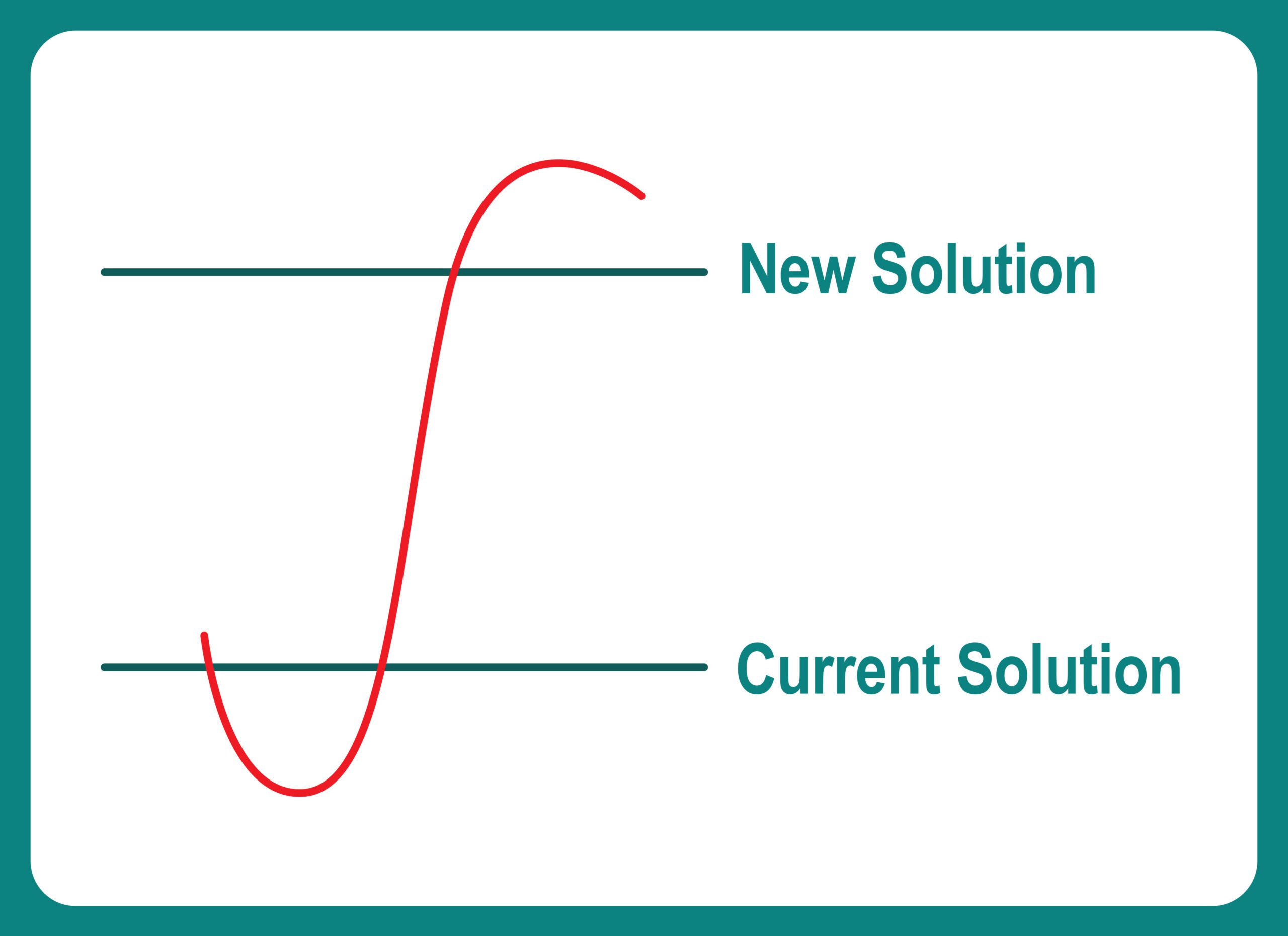
That’s why introducing discontinuous products depends on finding Early Adopters. These are the rare individuals willing to take risks on a new way of working. They don’t just buy your product—they co-create the solution with you, helping refine functionality and validate value.
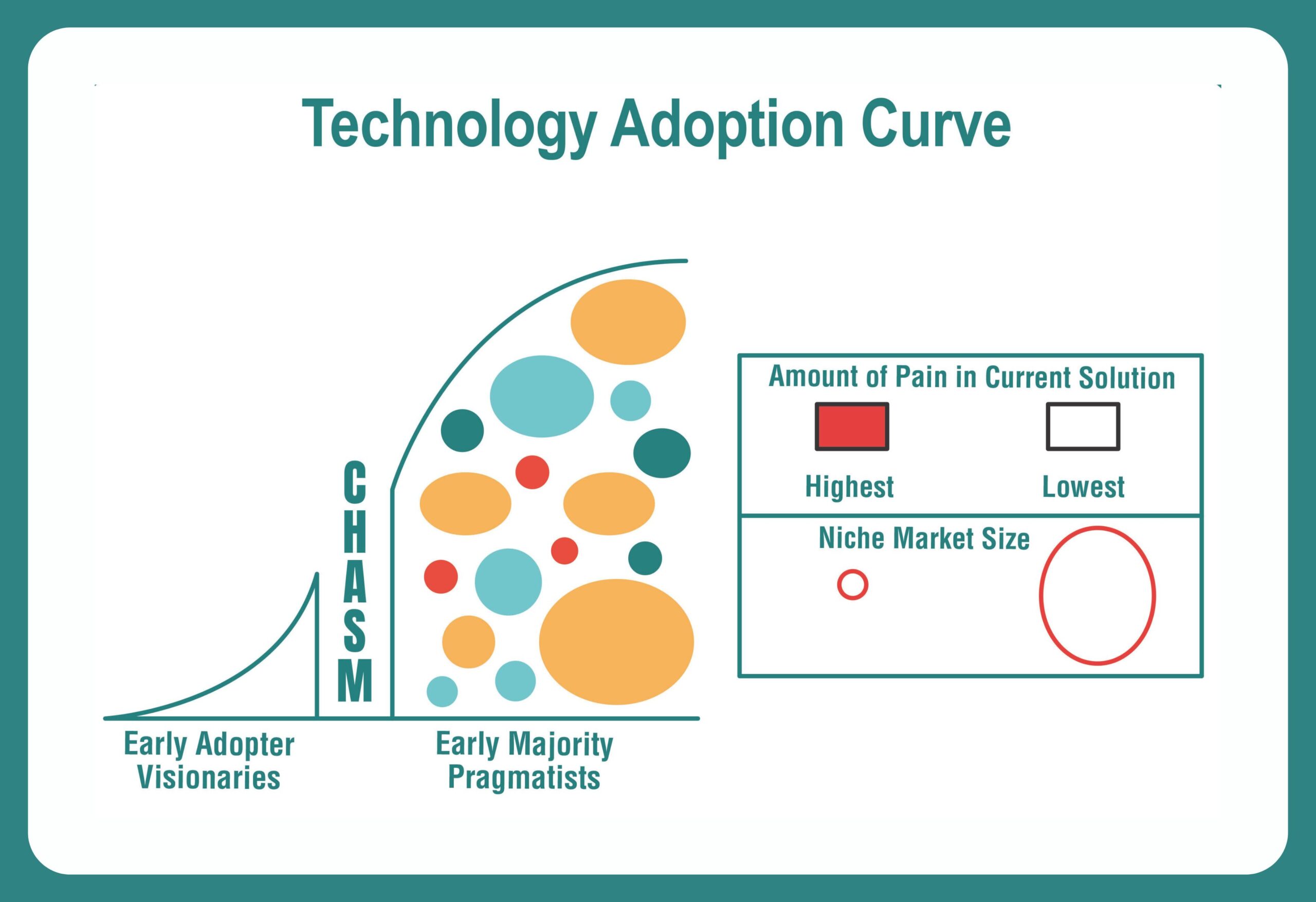
But here’s the catch: Early Adopters are not the same as the Early Majority. Geoffrey Moore, in Crossing the Chasm, makes this point clear: having a handful of visionary customers doesn’t mean you’re ready for mainstream adoption. In fact, it means you’re standing at the edge of the Chasm—the gap between early enthusiasts and the pragmatic majority.
Crossing the Chasm
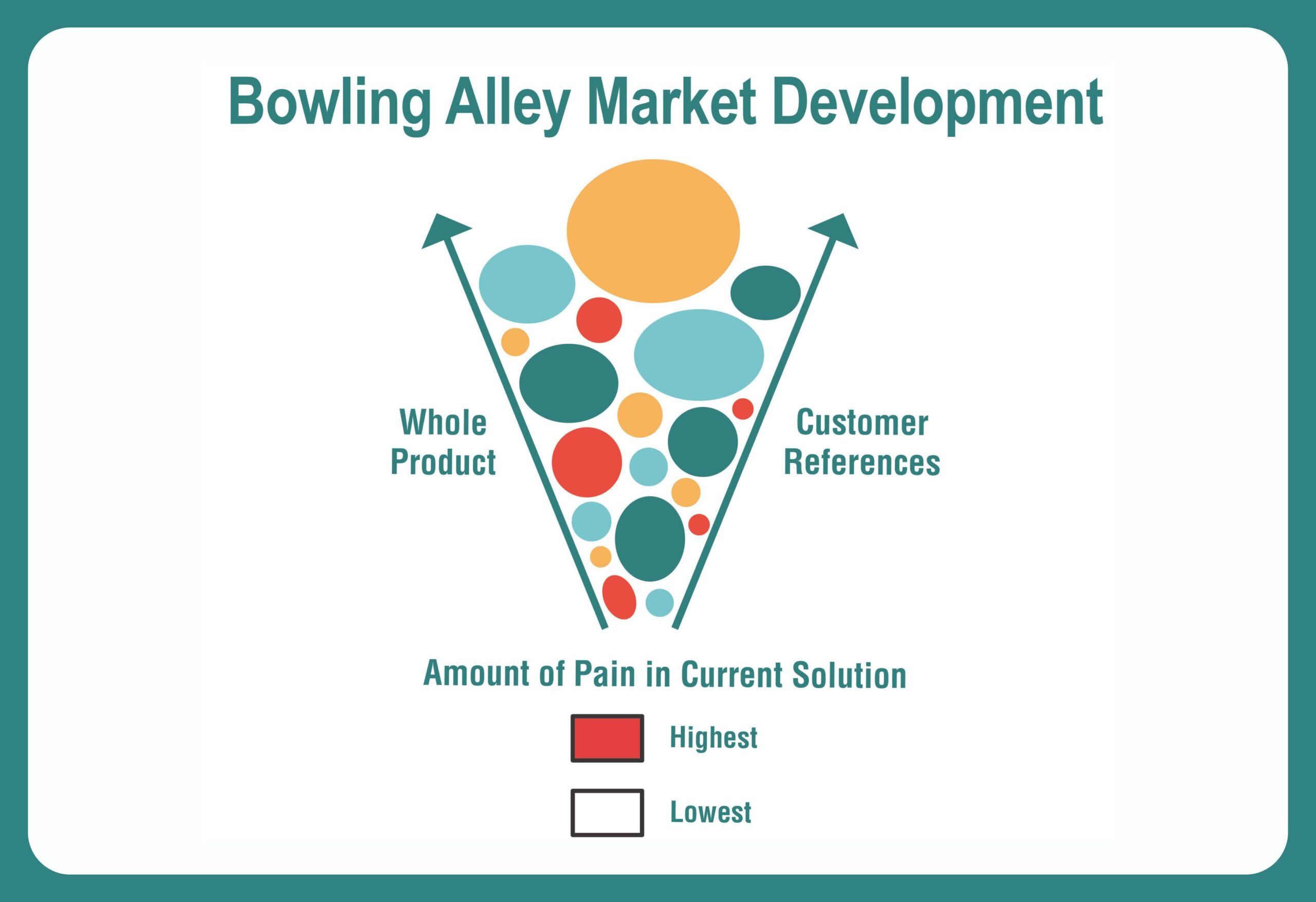
To move from promising pilot projects to a sustainable market, you need to reach the Early Majority—customers in enough pain that they are willing to endure the learning curve.
These customers play a pivotal role:
- They help you build a credible business case.
- They act as references for peers in similar situations.
- They push you to deliver the whole product solution, not just the core technology.
Once you’ve crossed the chasm and have Early Majority adoption, you can transition to traditional product marketing: benefit messaging, scalable campaigns, and sales processes that drive the phone to ring.
Key Takeaways
- Traditional products fit into existing workflows and can be sold with familiar marketing playbooks.
- Emerging products disrupt those workflows, demand new thinking, and require patient cultivation of Early Adopters and Early Majority customers before mainstream tactics work.
The difference lies not just in the product itself, but in the psychology of adoption. Traditional introductions are about differentiation; emerging introductions are about transformation. And transformation always takes more than just a good product—it takes the right partners, the right customers, and the right timing.
Related Blog Posts
- Early Adopters Have Already Let Go of the Past
- Q: Best Practices For Finding Early Adopters
- Markers That Startups Can Use to Identify Early Adopters
- Q: What Makes a Product Attract Early Adopters?
- Q: Help! I Can Only Find Laggards in My Target Customer Segment
- Q: How Do I Calculate Business Model Parameters For A Novel Product?
- Innovation Often Obsoletes Assumptions, Political Boundaries, and Work Process
- Drawing a Map of the Customer Organization
- 12 Books for the Busy Founder (includes a review of Crossing the Chasm)
- Mike Maples on Pattern Breakers