
A question from an entrepreneur who is struggling with to narrow the options they have brainstormed for their startup.
Q: How to Narrow My Options and Move Forward?
Q: I have been trying to narrow down the number of options I am considering for my startup and pick a clear direction. But the more I try to refine my loose plans into a clear strategy, the harder and more draining the effort feels. Why does that happen? What suggestions do you have for converging a set of options into a workable plan and start moving forward?
A: I think some people really like to hold on to possibilities, and others like to see things settled and have a definite plan. My sense is that you enjoy having a range of options and value optionality more than having a definite plan you can execute. Please note that this is different from crafting and executing a plan with branches and sequels, because in the latter case you are moving forward. The net effect of not making a choice is that you will let events foreclose options or may fail to do much of anything–leaving “men on base” instead of actually focusing and completing a few projects.
Define a sampling strategy where you execute scale model or prototype versions and see if they are viable. Or determine which options will expire first. If you don’t want to lose them, then you should get started. If you delay, you will have allowed them to lapse. Of course, new possibilities may have occurred to you by then, giving you a rich range of options to leave unexplored except in your mind.
It’s certainly possible to decide to quickly, engaging in “extinction by instinct.” But you current approach seems to leave you trapped in “analysis paralysis.”
Q: Some people really do seem wired to settle and move forward, while others stay open longer because the possibilities themselves feel alive and worth protecting. I have a good job but I have this dream of doing a startup, but I don’t want to screw it up.
This leads to a paralysis isn’t just indecision, it’s the sheer mental cost of keeping the whole map in view while still trying to narrow anything down. The “men on base” feeling is real, but sometimes those runners are the only thing keeping the bigger picture from collapsing into something too small too fast.
I have been trying to write everything down just so my brain doesn’t have to keep track of every branch, but I find I keep revising and extending the possibilities and I am not converging.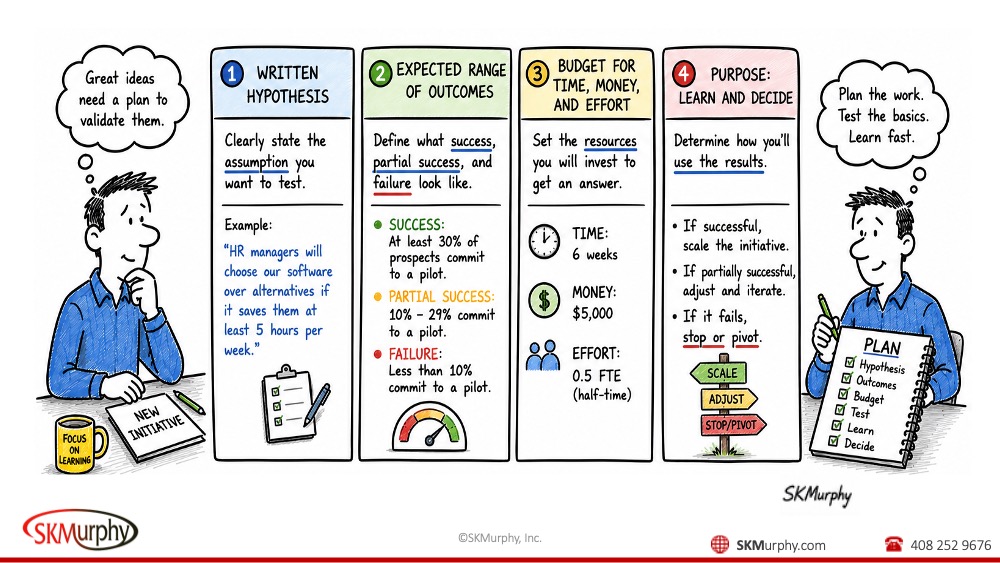
A: How much difference is there between the options you are considering? Unless this is a substantial life decision, you are better served by picking a direction and taking a small step forward. Action will tell you more than any amount of mental simulation.
You don’t have to quit your job to start interviewing prospects or working on a product nights and weekends. In fact I would encourage not to quit your job until you are sure a startup is something you want to do and you have evidence that people will pay for what you have in mind.
One way to get some clarity, if writing it down is not helping, would be to sit down with a trusted friend and walk around the situation with them. The one rule is that they can only ask clarifying questions unless you specifically ask them for advice. Record the conversation and listen to it later or look at the transcript to hear yourself. This is a scaled down version of what the Quakers call a “Clearness Committee” I wrote about this in “Asking Questions from a Caring Perspective” See for a more detailed description. You are also welcome to attend a Bootstrappers Breakfast and talk about one of your ideas, sometime the act of voicing your idea can help you organize your thoughts.
I never want to tell someone they should not pursue their dreams or they cannot accomplish something, but it is a source of concern that you want to develop a perfect plan and then execute it. It’s a very rare occasion you can do this as an entrepreneur. You make your plan when you have the lease amount of information and then will have to update it based on what you learn and events that occur.
Most options in any decision don’t lead to significantly different outcomes, or at least differences that are foreseeable at the time of taking action. The loss of time is almost always the more critical resource than trying to optimize a choice unless it’s a significant decision (e.g., one that comes up less than once a year).
I enjoy playing turn-based computer games that are complex. Unfortunately this bears little resemblance to what is needed to get a startup off the ground. Most opportunities are perishable and you need to act before you have all of the information you would like. You need to continually update your plans in response to changes in the market. It’s not like building scenery for your model railroad or collecting stamps where you can work at your own pace and when you feel like it. I think you should try to talk to some other founders about what their first two years were like and how much their plans changed.
Related Blog Posts
- Uncertain Times
- Uncertain Times Are The End of An Illusion
- Dr. Atul Gawande on Managing Complexity and Uncertainty
- Making Business Decisions in Uncertain Times
- Planning in a Bootstrapped Startup: a Model from Will Kamishlian
- A Holistic Approach to Launching a Bootstrapped Startup
- Chalk Talk: Write Down Key Hypotheses