
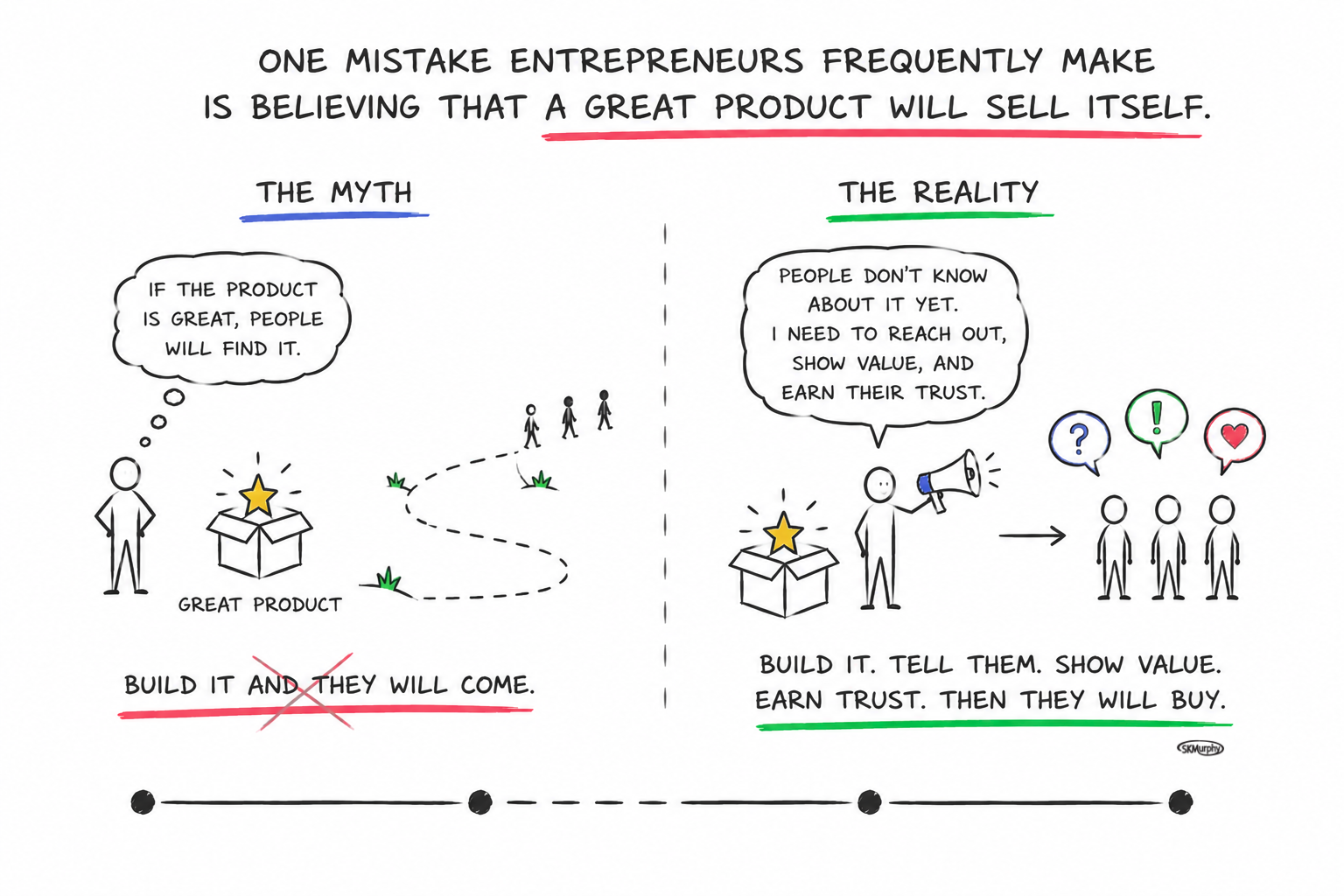
One mistake entrepreneurs frequently make is believing that a great product will sell itself. Many technical founders assume that if they build something innovative, customers will naturally discover it, recognize its value, and buy it.
One Mistake Entrepreneurs Make: A Great Product Will Sell Itself
One mistake entrepreneurs frequently make is believing that a great product will sell itself.
Many technical founders assume that if they build something innovative, customers will naturally discover it, recognize its value, and buy it.
In my experience, even excellent products need deliberate sales, marketing, and customer education efforts to succeed.
Customers are just like you: busy and focused on their own priorities. It may be not immediately obvious to them what problem the product solves, how it differs from alternatives, or why they should change their current behavior to use it.
Entrepreneurs must actively engage prospects, listen to their needs, explain the value of their solution, and provide measurable proof of value.
Early sales conversations provide important feedback that helps refine both the product and the messaging. Many successful startups did not grow because their products were perfect: they grew because founders spent significant time talking to customers, learning from their suggestions and concerns, and adapting their offerings accordingly.
It’s essential that your product provides value to a customer, but value still needs to be communicated, demonstrated, and delivered.
Don’t believe “If you build it they will come.”
Entrepreneurs who combine product development with customer development, marketing, and sales are far more likely to achieve sustainable growth.
Three Very Dangerous Assumptions
- Prospects are willing to explore your website for more than a minute even if they cannot see something that they can use.
- Because your team finds your product concept compelling it must be the case that what you have is so intrinsically compelling that you don’t have to develop a real model for the value that you offer–and to set a price that reflects that value.
- People will pay you for an abstract or fuzzy set of benefits.
Related Blog Posts
- Vision Is Critical But Avoid The “Field of Dreams”
- How Do I Make Sure I Understand the Customer’s Problem and Present a Vision of a Solution?
- Balancing Engineering Vision vs. Customer Expectation
- Introducing Emerging Technology
- Micah Boster on Market Insertion
- Chalk Talk: Sarasvathy’s Effectuation Model for Startups
- How Founders Can Learn Sales on the Job
Pingback: Silicon Florist links arrangement for July 6, 2026 – Portland Oregon startups, tech, news, events, jobs, and community