
A collection of quotes for entrepreneurs curated in June 2026 around theme of initiative and effective action.
Quotes for Entrepreneurs Curated in June 2026
I curate these quotes for entrepreneurs from a variety of sources and tweet them on @skmurphy about once a day where you can get them hot off the mojo wire. At the end of each month I curate them in a blog post that adds commentary and may contain a longer passage from the same source for context.
My theme for this month’s “Quotes for Entrepreneurs” is initiative and effective action.
+ + +
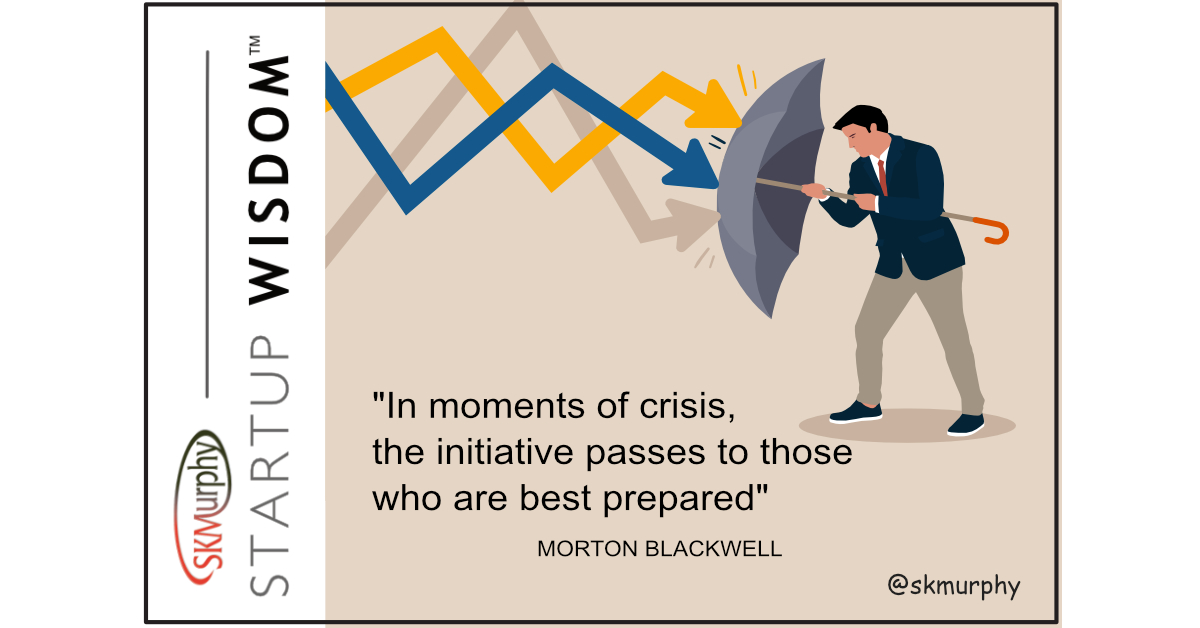
image source: 123rf.com/profile_gannvector 90869038
+ + +
2. Don’t fire all of your ammunition at once.
8. You can’t be a plan with no plan.
28. The test of moral ideas is moral results.
41. “In moments of crisis, the initiative passes to those who are best prepared”
+ + +
Self-Responsibility
I am responsible for
- my existence.
- the achievement of my desires.
- my choices and actions.
- the level of consciousness I bring to my work and my relationships.
- my behavior with other people–co-workers, associates, customers, spouse, children, and friends.
- how I prioritize my time.
- the quality of my communications.
- my personal happiness.
I accept that no one is coming to make my life right, or save me, or redeem my childhood, or rescue me from the consequences of my choices and actions. In specific issues, people may help me, but no one can take over primary responsibility for my existence. Just as no one else can breathe for me, no one else can take over any of my other basic life functions, such as earning the experience of self-efficacy and self-respect.
The need for self-responsibility is natural; I do not view it as a tragedy.
Nathaniel Branden “The Six Pillars of Self-Esteem” (1994) [Archive (PDF)]
I think entrepreneurs commit to self-efficacy. They help others and accept help from others, they commit to earning a living based on an exchange of value with others, but they reflect on outcomes–satisfactory and unsatisfactory, wins and losses, failures and successes–in order to learn from past mistakes to avoid them in future and to build on demonstrated strengths and capabilities. Branden defines the six pillars as:
- Living consciously
- Self-Acceptance
- Self-responsibility
- Self-assertiveness
- Living with a purpose
- Personal integrity
I originally curated this in July 2025; someone retweeted it today and I realized it apply equally to initiative and personal agency.
+ + +
“Be the hero of your own movie. If your life was a movie and it started now, what would the hero of your life’s movie do right now? Do that. ”
Joe Rogan “Be The Hero of Your Own Movie”
+ + +
“It will never rain roses: when we want to have more roses, we must plant more trees.”
George Eliot in “The Spanish Gypsy”
+ + +
“No man’s life, liberty or property are safe while the Legislature is in session.”
Gideon Tucker in “Final accounting in the Estate of A.B. (1866)”
+ + +
“Organizational success is downstream of a culture of urgency that considers a problem important to solve and is willing to work hard on solving it.”
Brian Potter (@_BrianPotter) in “How Long Does It Take to Plan a Bridge?“
Potter is a good analyst and tackles a number of construction-related questions on his substack. One approach he favors consistently, which entrepreneurs can learn from, is to look at an individual problem as part of a population of related or similar problems. He then hunts for the characteristics that drive a variance in outcomes.
Mark Twain observed, “History never repeats itself, but the Kaleidoscopic combinations of the pictured present often seem to be constructed out of the broken fragments of antique legends.” Which time has simplified to “History does not repeat itself, but it does rhyme.” Look for problems that rhyme with the one you are trying to solve.
“The solution to a problem that rhymes with yours will often spark new thinking on your part, enlarging the set of viable options you can consider.”
Sean Murphy in “Making Business Decisions in Uncertain Times“
+ + +
“This happens more often than you might realize — not just in mercenary bands or other military contexts, but also in businesses large and small, in churches and in amateur sports leagues and even in individual family units. Somebody wakes up with the realization that the whole thing is headed towards shipwreck, and says to themselves, “Well, I better take it over.” At the moment we wake up, most of us don’t realize the dreadful truth: once we take charge, there is no walking away from it with honor intact, and when the outcome is finally determined we will own it for good or for ill.”
John Psmith (@PsmithBooks) [pseudonym] in a “Review of Xenephon’s The Anabasis”
I used a passage from Xenephon‘s Anabasis in “Burn Your Boats But Not Your Bridges.”
+ + +
“People always ask me, “What’s the secret to being a successful CEO?” Sadly, there is no secret, but if there is one skill that stands out, it’s the ability to focus and make the best move when there are no good moves. It’s the moments where you feel most like hiding or dying that you can make the biggest difference as a CEO.”
Ben Horowitz in “The Hard Thing About the Hard Thing”
Sometimes you have to make a move because standing still is less and less tenable. I originally curated this quote by Edwin Louis Cole in April 2012:
“You don’t drown by falling in the water; you drown by staying there.”
Edwin Louis Cole
I blogged about “The Best Bad Plan” using this scene from the movie Argo as a point of departure.
Tony Mendez: “There are only bad options. It’s about finding the best one.”
Warren Christopher: “You don’t have a better bad idea than this?”
Jack O’Donnell: “This is the best bad idea we have, sir, by far.”
Reconciling yourself to the “best bad plan” is a key skill for entrepreneurs.
+ + +
“Planning is important, but the most important part of every plan is what to do when things don’t go according to plan. A future filled with unknowns is everyone’s reality. A good plan has a margin of safety with funds in reserve and a flexible timeline that enable intelligent reaction and improvisation when needed.”
Condensed from a much longer section that begins with “2. Planning is important…” by Morgan Housel in “the Psychology of Money”
I have blogged about the value of maintaining a firm grasp on contingencies in “Constructive Pessimism” and “Hope for the Best, Prepare for the Worst.”
+ + +
“Actions have consequences. So does inaction.”
Frank Sonnenberg in “When Silence Says it All” (collected in “The Path to a Meaningful Life“)
A longer excerpt
“Actions have consequences. So does inaction. Restoring honor and integrity begins by standing up for your beliefs, holding people accountable for their actions, and — above all — leading by example. Virtue isn’t about demanding more from others; it’s about expecting more of yourself. It takes courage to speak the truth when silence is easier, honesty to do what’s right even when it’s difficult, and compassion to help those who can’t help themselves. That’s how we rebuild trust, restore decency, and remind the world that character still matters.”
Frank Sonnenberg in “When Silence Says it All” (collected in “The Path to a Meaningful Life“)
Three related quotes
- “If you choose not to decide, you still have made a choice.”
Neil Peart “Freewill” - “A decision unmade is a decision made to stay the same.”
Mignon McLaughlin - “When you have to make a choice and don’t make it, that in itself is a choice.”
William James “The Principles of Psychology”
+ + +
“When there’s a big disappointment, we don’t know if that’s the end of the story. It may be just the beginning of a great adventure.”
Pema Chodron in “When Things Fall Apart: Heart Advice for Difficult Times“
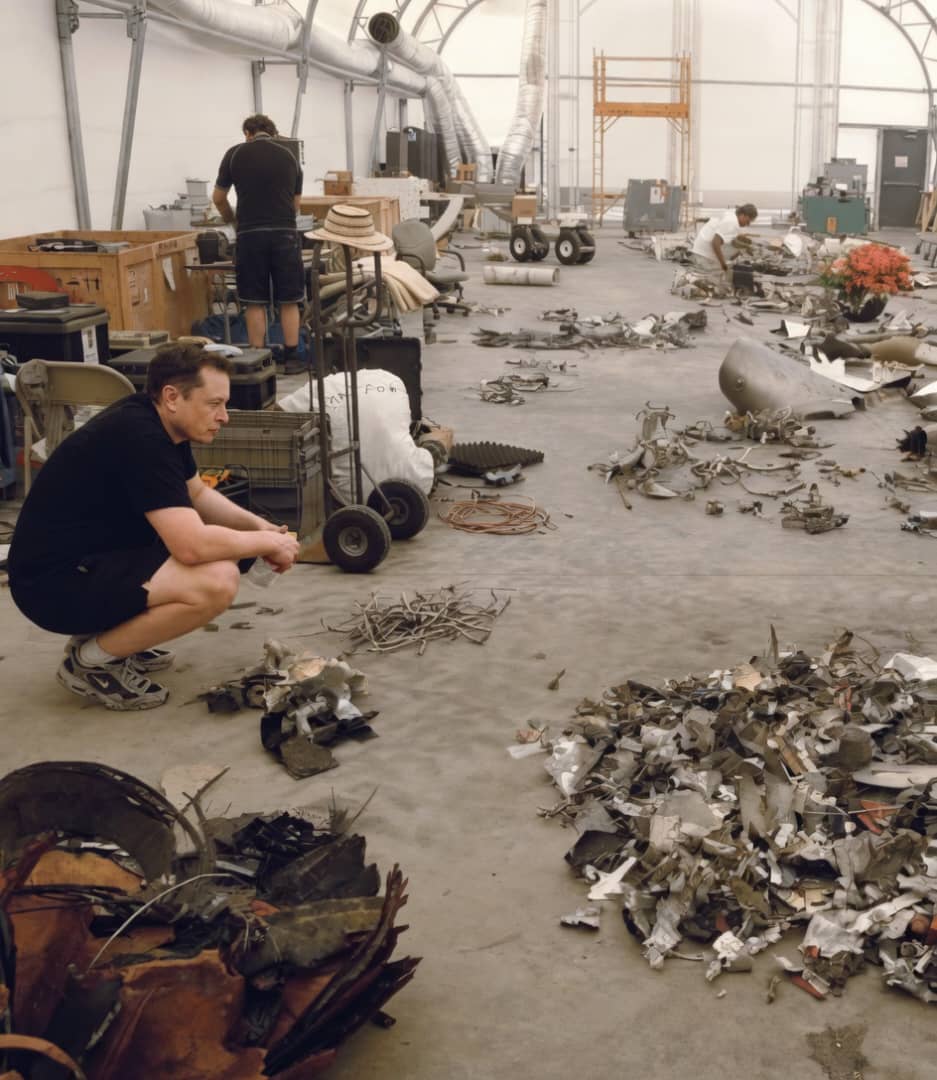
Next time you think of giving up, remember this photo of Elon in 2008.
Szymanski tweet
+ + +
“Tom Peters: These Playmobil toys of yours… they do amazingly well, all over the world. So what’s their secret? What do they do that’s so interesting?
Horst Brandstätter: It’s not what the toy does that’s interesting. It’s what the child does with the toy that’s interesting.”
Recounted by Hugh Macleod in “The Product Does not get to be Kick Ass Until the User Kicks Ass” and his ebook “Authenticity is the New Bullshit” (2013)
+ + +
“You have to frame the world in order to interact with it.
Chaos is what you see when you don’t know what you are looking at.”
Jordan Peterson in “2017 Personality 15: Biology/Traits: The Limbic System (minute 42)“
It’s hard to take the initiative when all you see is chaos. Agency is enabled by your ability to diagnose a situation and identify opportunities for improvement or at least mitigation and cutting of likely losses.
+ + +
“Creativity is the ability to come up with original, useful ideas. Good ideas have lonely childhoods. You can’t plan for creativity. You can only plan to do the work.”
Hugh Macleod in “Authenticity is the New Bullshit” (2013)
+ + +
“It’s easy to educate for the routine, and hard to educate for the novel.”
Jonathan Rosenberg
Quoted by Jeff Jarvis in “TEDxNYed: This is Bullshit” originally curated in March 2010, it reminds me of this quote by James Carse:
“To be prepared against surprise is to be trained.
To be prepared for surprise is to be educated.”
James Carse in “Finite and Infinite Games“
I used this in “Planting Trees: Finite and Infinite Entrepreneurship.”
+ + +
“The question is not ‘How do we survive until things return to normal?’ Instead it’s ‘How do we build a stronger company in this environment?’ You should be asking, ‘what do we prioritize?’ not ‘What can we cut?'”
Dave Kellogg in “Emerging Stronger From The Downturn Than You Went In.” (Jan-24-2023) [Slide 5]
+ + +
“Enthusiasm is the electricity of life. How do you get it? You act enthusiastic until you make it a habit. Enthusiasm is natural; it is being alive, taking the initiative, seeing the importance of what you do, giving it dignity and making what you do important to yourself and to others.”
probably not Gordon Parks
I love the quote, which is widely attributed to Parks, but it does not match his writing style and the earliest cite is to a year after his death in an anonymous posting on Sermon Central. Still, it’s a good insight into the interaction between enthusiasm and initiative.
+ + +
“You can analyze the past, but you need to design the future.”
Edward de Bono
+ + +
“Most success you see is the result of being able to do the right thing long enough.”
Alex Hillman
One aspect of initiative is that you have to sustain an action you have started long enough to see it bear fruit.
+ + +
“The art of teaching is the art of assisting discovery.”
Mark van Doren
True for sales as well
+ + +
“I’m lost, but I am making record time.”
Allan Lamport
I think this captures the risk of confusing effort with results. Initiative does not mean taking action without a clear impact in mind. Quoted in “Metro’s Goldwyn Mayor: The Complete Malapropisms of Allan Lamport” (1995) compiled by John Robert Colombo.
+ + +
“There was no doubt about it. This bastard was a serious king-hell Crazy. He had that rare weird electricity about him–that extremely wild & heavy presence that you only see in a person who has abandoned all hope of ever behaving “normally.”
Hunter S. Thompson “Fear and Loathing: On the Campaign Trail ’73“
+ + +
“If you climb in the saddle be ready for the ride.”
Cowboy proverb
This seems appropriate for a month devotes to quotes about seizing the initiative and taking action. Be prepared for the consequences–good and bad.
+ + +
“Effectiveness in uncertain times lies as much in the capability for sensemaking as it does in the capability for decision making. Capabilities for making sense of the unexpected get activated, organized, strengthened, and institutionalized more or less effectively depending upon how people handle failure, simplification, operations, resilience, and expertise. In compact form, the guidance implicit in these five is:
- Scrutinize small failures.
- Refine categories that you impose.
- Watch what you are doing and what emerges.
- Make do with the resources you have.
- Listen.
As these five increase, transient organizing becomes more mindful and more responsive to the unexpected at earlier points in its unfolding.
Karl Weick “Making Sense of the Organization (Vol 2) Chapter 1
+ + +
“Inability to focus is a disease. And it’s becoming a pandemic spreading throughout the world. Cheap entertainment has made people’s minds soft. They can’t read books anymore. They can’t sit down and work for an hour straight with no breaks. Many can’t even watch TV without also being on their phone. Cure yourself of this, and you’ll have a massive advantage in the future. Give in to it, and it’ll ruin you.”
Himanshu Bakshi in “Inability to Focus is a Disease.“
Focus and follow-through are essential to taking the initiative in a way that leads to effective action.
+ + +
“Discontent is at the root of the creative process: the most gifted members of the human species are at their creative best when they cannot have their way.”
Eric Hoffer
The primary reason you don’t get your way is that methods that used to work no longer work: what got you here won’t carry you forward. Initiative that leads to effective action starts with an examination of what you have to change about your approach or your methods. But you also have to make sure you don’t break what’s working, uncovering that is at the heart of “appreciative inquiry” and “amplify positive deviance” methodologies. See these posts for more on understanding what’s still working:
- Early Customer Conversations: Use Appreciative Inquiry, Amplify Positive Deviance
- Managing Change in an Organization: An Incomplete Resource List
h/t to Brad Pierce for pointing out in a comment on LinkedIn: “When you say, ‘what got you here won’t carry you forward,’ could it sometimes be that you’ve misidentified or neglected what really got you here?” I answered: That’s a very good catch and one that I had not considered. Yes, I have seen many individuals and firms not realize some of the key things they were doing that were contributing to their success and inadvertently abandoning them. I have also observed individuals get lucky with an approach that is not really repeatable much less scalable and stick with it because the win it produced was so memorable. This led me to add the “make sure you don’t break what’s working.”
+ + +
“The first abuse of power is not realizing that you have it.”
James Richardson in “Vectors“
On reason we don’t learn the full extent of our powers is limits that we encounter when we are young. It takes a while to figure out what we are truly capable of.
“Learning too soon our limitations, we never learn our full powers.”
Mignon McLaughlin
I like this quote by Mignon McLaughlin; I used in “Success for a Bootstrapper” on the value of perseverance and also in April 2009 and June 2018 collections.
+ + +
“We see the same basic pattern recur in conflicts as different as the American Civil War, World War II, and the Russo-Ukrainian War: an initial phase in which one or more armies are commanded by blundering incompetents, a transitional phase in which the incompetents are rapidly killed off or forced to retire, and a terminal phase in which the battlefield is controlled by dead-eyed men of ignoble origin and impressive ability. This is one reason that the board game/computer game model of attritional warfare isn’t accurate. Most armies get stronger and smarter as they take losses, until very close to total defeat.”
John Psmith (@PsmithBooks) [pseudonym] in a “Review: The Hard Thing About Hard Things, by Ben Horowitz“