
Good Decision, Bad Outcome
“Good decision, bad outcome” is a a reminder to judge the quality of a decision by your process and state of information at the time you decided.
Good Decision, Bad Outcome Read More »
“Good decision, bad outcome” is a a reminder to judge the quality of a decision by your process and state of information at the time you decided.
Good Decision, Bad Outcome Read More »

A hunger for certainty will not help an entrepreneur make timely decisions or manage the level of ambiguity and uncertainty they need to navigate through.
We Cannot Sate Your Hunger For Certainty But We Can Increase Your Odds of Success Read More »
The first 3 unknowns for a startup are Customers, Features, and Message. Of these the target customer is the key variable to lock down first.
3 Equations & 3 Unknowns: Target Customer is Key Initial Value Read More »
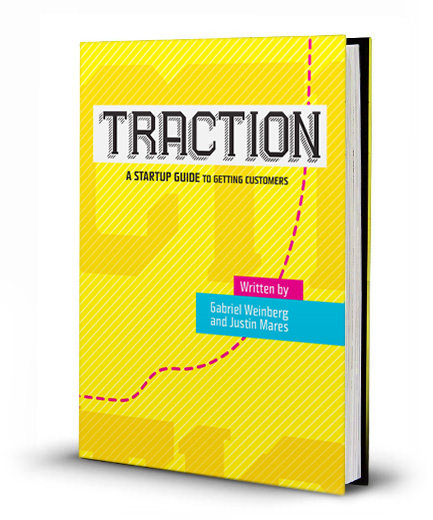
Gabriel Weinberg is a serial entrepreneur (latest startup: DuckDuckGo), a Hacker Angel, insightful blogger, and frequent contributor to Hacker News. He is writing a book on how startups get traction and interviewing folks like Patrick McKenzie to collect lessons learned from a variety of perspectives. I was delighted when he approached me to take part
Gabriel Weinberg Interviews Me For His Traction Book Read More »
Here are four movies to renew your gumption, I watch one when I need to refill my gumption or recover my sisu: The Verdict, Apollo 13, The Dish, and The World’s Fastest Indian.
Four Movies To Renew Your Gumption Read More »
DreamSimplicity interviews Sean Murphy on the SKMurphy, Inc. startup stages model: formation, open for business, early customers, finding a niche, and scaling up.
DreamSimplicity Interviews Sean Murphy Read More »
A summary of tips for modeling and managing cash flow at a recent bootstrappers breakfast briefing by Rick Kadet.
Tips For Modeling & Managing Cash Flow Read More »

Disruption is caused by the new business models an innovation enables. A disruptive innovation can be hard to spot because competitors can offer a different value proposition, not necessarily a better one.
Distant Early Warning Signs of Market Disruption Read More »
A market as the set of buyers who will be guided by each other’s purchase decision for a particular product. Focus on a niche market lowers your messaging and outreach costs and increases your chances for success.
Focus On a Niche Increases Your Chances For Success Read More »
A baker’s dozen of common mistakes that I have seen founders make preparing and delivering new product introduction demos and presentations.
Common Mistakes in New Product Introduction Demos Read More »

A “killer instinct” that allows you to focus and prioritize is helpful, but if it blinds you to win-win outcomes you will not succeed as an entrepreneur. Killer Instinct In “Killer Instinct” Rafael Corrales writes: “There are no plus-minus stats to measure a player’s ruthlessness, his desire to beat his opponent so badly he’ll need
Killer Instinct Can Blind You to the Value of Partners Read More »

I think that there are better, impossible, and unthinkable products. Better products are “15 minutes ahead.” Impossible products relax one or two design key constraints. Unthinkable products restructure the design pattern or paradigm to achieve an unprecedented result.
Better, Impossible, and Unthinkable Products Read More »
Update Feb-24-2011: Since I first wrote this in 2010 the Effectuation.Org site has been considerably upgraded and contains a lot more information on research on entrepreneurship by Saras Sarasvathy. Recapping ideas, papers, and books that had changed my life yesterday reminded me of Saras Sarasvathy’s Effectual Reasoning Model from her 2001 paper “What Makes Entrepreneurs
Saras Sarasvathy’s Effectual Reasoning Model for Expert Entrepreneurs Read More »
It’s a good idea to do customer development in parallel with product development: talk to prospects, surveys are not enough.
Do Customer Development in Parallel with Product Development Read More »
Marc Andreessen’s Entrepreneurial Insights were rescued from bit rot and decay first by Jed Christiansen and then by the Internet Archive.
Marc Andreessen’s Entrepreneurial Insights Rescued from Bit Rot by Jed Christiansen Read More »

Good content is the basis for good marketing: your messaging must explain your knowledge of customer problems and how you can help.
Good Marketing is Good Content Read More »
Bouncing back from a setback is a challenge that entrepreneurs need to navigate repeatedly. Bouncing Back On Hacker News about 18 months ago someone posted a question on “Dealing with Post Startup Depression” that read I recently shut down my first startup ever. I am having a really tough time getting over it and starting
Both engineering and entrepreneurship alternate exploration and verification cycles to develop a solution that satisfies a customer’s need. Both of these rely on the scientific method of “observation, hypothesis formation, prediction, and experimentation” to develop and validate testable theories, engineering solutions, and profitable products. Both require that a new configuration or an opportunity be recognized
The Limits of “I Will Know It When I See It” Read More »

A quick overview of the Hadoop Summit 2009: we are looking at project CPU budgets measured not in CPU years but CPU millennia.
Hadoop Summit 2009 – Quick Impressions Read More »
I don’t know how I overlooked Andrew Chen’s “Your Ad-Supported Web 2.0 Site is Actually a B2B Enterprise in Disguise” He succinctly outlines some hard facts that many founders of media startups spend a year of their life to learn:
Andrew Chen: Most Web 2.0 Media Startups Have a B2B Enterprise Model Read More »