1 Idea Stage

Getting Better at Customer Discovery Conversations

Getting better at customer discovery conversations requires preparation, practice, note taking, and follow-up. It can also be tremendously helpful if you can arrange for a partner who can observe, contribute,  take notes, and de-brief with you. Even if you are a solo entrepreneur “trade interviews” with another entrepreneur: agree to help them with one of their

Getting Better at Customer Discovery Conversations Read More »

Am I Making A Fool Of Myself?

One of the most common questions I hear in conversations with entrepreneurs at a Bootstrapper Breakfasts, in Office Hours calls, or with clients–and not infrequently from myself when comparing notes with peers–is, “Am I making a fool of myself?” Here are some questions you can use to clarify your situation when you are starting to feel like a

Am I Making A Fool Of Myself? Read More »

Customer Development: Scouting A New Market

There are no undefended markets. Established markets are characterized by entrenched competitors who have strong brand identify and deep customer relationships. Although Bill Hewlett always strove to “attack the undefended hill,” the reality is that any market worth having is at least lightly defended by the status quo of current alternatives. When scouting a new

Customer Development: Scouting A New Market Read More »

notebook to Organizing Your Experiment Log

Organizing Your Experiment Log

In Chapter 9 of “Zen and the Art of Motorcycle Maintenance,” Robert Pirsig goes into an extended explanation of the Scientific Method using the metaphor of motorcycle repair. He stresses the value of an experiment log, explaining how to organize it so that you don’t become lost in exploring for solutions to a problem. I have

Organizing Your Experiment Log Read More »

Q: How Can I Calculate The Exit Value Of My Idea?

It’s masturbation to calculate the exit value of idea that has not been reduced to practice and achieved some level of traction. The real question is how much time and effort to invest to achieve a level of traction that would allow place a value on the business that leverages the ideas. Often it’s not a

Q: How Can I Calculate The Exit Value Of My Idea? Read More »

Planning and Reflection

Ash Maurya rebooted his blog as “The Space Between“–experimental format where he is exploring the space between ideas–and has offered a number of short reflective posts. Here are excerpts from three where he explores the value of planning and reflection, and the need to prioritize learning over the illusion of progress.

Planning and Reflection Read More »

Good and Bad Reasons to Pivot

Much has been written about a startup making a pivot in direction after Eric Ries first coined the term in a 2009 blog post “Pivot don’t Jump to a New Vision.” The word pivot has attracted almost as much wordplay as the word lean.  What follows is a short list of good and bad reasons to

Good and Bad Reasons to Pivot Read More »

Resources for Student Entrepreneur Organizations

With the 2016  school year getting ready to start in the next six to eight weeks at most colleges and universities I have had several conversations with student entrepreneur organizations about how I might be able to help them. I have developed content and given talks and webinars over the last five years that may provide

Resources for Student Entrepreneur Organizations Read More »

A Serious Conversation Can Change Your Life

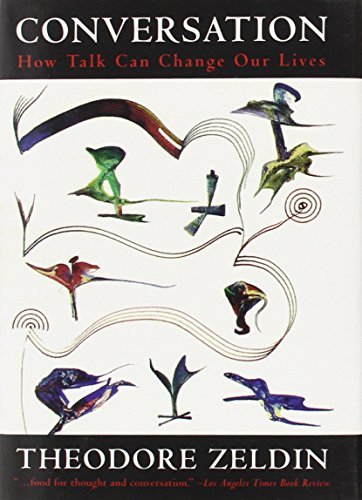
Theodore Zeldin gave a series of six lectures on conversation that were collected in slim book called “Conversation: How Talk Can Change Our Lives.” I found it offered a number of insights on what is needed for a serious conversation. And since serious conversation is one of the primary tools for early market exploration and

A Serious Conversation Can Change Your Life Read More »

Nature, Technology and Magic

What seems natural, artificial, or supernatural is a function of familiarity. Nature is the background or context for innovation. The challenge is that we live in a world and culture formed by millennia of innovation so that some incredibly advanced technologies seem natural. The difference between technology and magic is not that one works more

Nature, Technology and Magic Read More »

Scroll to Top